
The fix in 5 steps
Let it air dry
In this guide
Your carpet passed the sniff test. His nose didn't. To prevent dog accidents in the same spot, the smell has to go before the habit can. Six steps break the cycle. Sudden accidents or blood in the urine? Vet first.
- Find every spot with a black light, in a dark room, including the ones you can't smell.
- Blot up as much urine as you can first.
- Soak each spot with an enzyme cleaner like Nature's Miracle Advanced Dog Stain & Odor Eliminator (see it at Amazon), our pick for fresh dog accidents, so it reaches everywhere the urine went. On carpet, use much more than you think you need.
- Let it soak as deep as the accident went, then air dry. Don't blot it dry.
- Block access to the spots with closed doors, baby gates or furniture, and keep your dog in sight or on a tether. Interrupt and redirect outside the moment you see sniffing, circling or heading for a problem spot.
- Take your dog out often at first (after meals, naps and play), go outside with them, and praise and treat the moment they go.
Be patient: expect weeks of steady practice, not days.
Clean the odor at its source
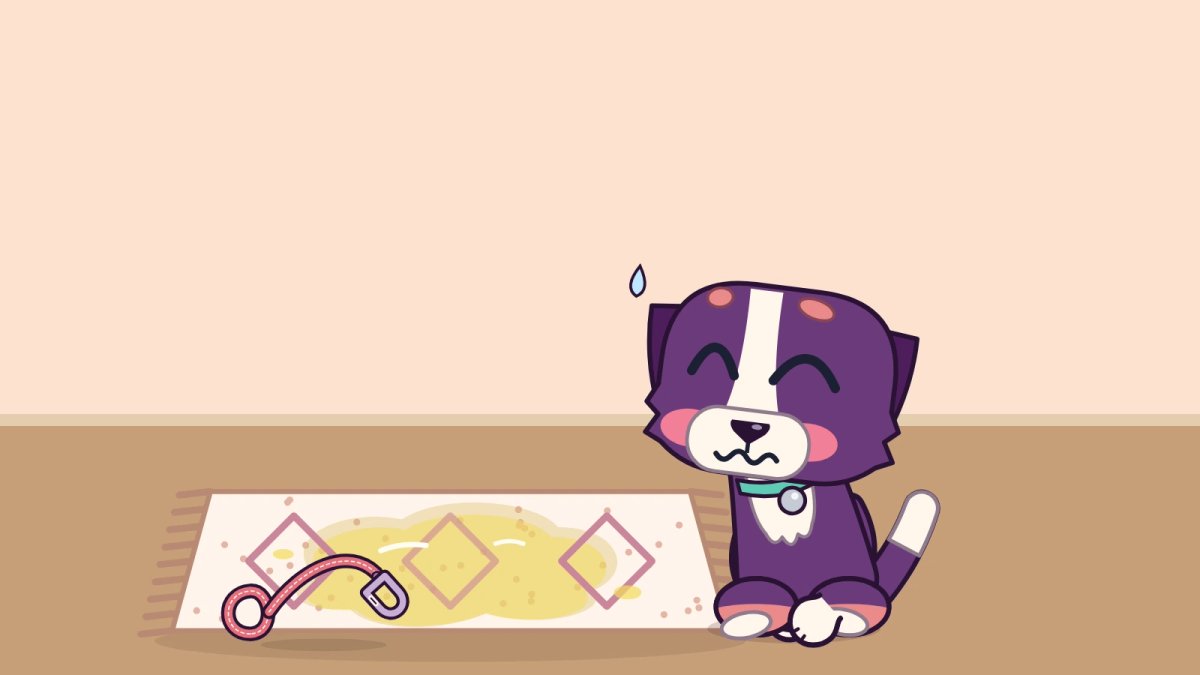
This is the most critical step. Regular cleaners won't cut it: you need enzyme cleaners.
Comparing bottles? See the best enzyme cleaners for dog urine.
How enzyme cleaners work
Enzyme cleaners break down the organic compounds in urine. They are made to break down the source instead of covering it with perfume.
Proper application
- Blot up as much urine as possible first
- Apply enzyme cleaner liberally: it needs to reach everywhere the urine went
- Let it soak in fully
- Don't blot dry: Let it air dry
- For old or severe stains, repeat the process
For carpet
Urine often soaks through to the padding and even subfloor:
- Use much more cleaner than you think you need
- Consider lifting carpet to treat padding directly
- For severe cases, replace the padding
- A black light can reveal hidden urine spots
Why does my dog keep peeing in the same spot?
- Eliminate all odor. Blot up what you can, then apply enzyme cleaner liberally and let it air dry. Your dog can smell what you cannot.
- Block access. Close doors, use baby gates or place furniture over favorite spots.
- Increase supervision. Watch for sniffing and circling. Interrupt and redirect outside right away.
- Reinforce good behavior. Go outside with your dog, then praise and treat immediately after they go.
Sudden accidents in a housetrained dog, blood in urine or straining: see your vet.
Key takeaways
- Pets return to spots they can still smell: complete odor removal is critical
- Enzyme cleaners break down the urine itself instead of covering it with perfume
- Block access to problem areas during retraining
- Reward outdoor success to reinforce good habits
It isn't spite. It's mostly smell, plus a few habits:
The smell factor
You cleaned the spot and can't smell a thing. Your dog still can, and to him it says "this is a bathroom." Cleaned it and your dog still heads back? Start with our dog pee cleanup picks.
Other causes
Also on the list: a medical issue your vet can check, or a schedule change that sets off a regression. Older dogs can have more accidents too, so mention it to your vet.
Block the spot to prevent repeat accidents
Read this sectionHide this section
Until the spot stops smelling like a bathroom, it's closed for business:
- Close doors to problem rooms
- Use baby gates
- Place furniture over favorite spots
- Keep dog in your sight or confined when unsupervised
Increase supervision
Read this sectionHide this section
You can't correct behavior you don't see:
- Keep your dog in sight at all times
- Use a tether to keep them near you
- Watch for pre-elimination behaviors (sniffing, circling, heading toward problem spots)
- Interrupt and redirect outside immediately
Reinforce good behavior
Make outdoor elimination highly rewarding:
- Go outside with your dog (don't just let them out)
- Praise and treat immediately after they go
- Use a specific phrase ("go potty") as a cue
- Make the outdoor bathroom spot convenient and consistent
Rule out medical issues
Read this sectionHide this section
See your vet if:
- Accidents are sudden after being housetrained
- There's increased frequency or urgency
- You notice blood in urine
Additional tips: your dog seems to be straining, they're drinking more water than usual, the dog is a senior.
Special situations
Read this sectionHide this section
Stop dog marking indoors
Different from regular urination, marking involves small amounts deposited on vertical surfaces:
- Ask your vet about the marking, including whether neutering is an option
- Address any inter-pet conflicts
- Reduce access to windows where they see other animals
Additional tips: clean all marked spots thoroughly, consider belly bands for management while training.
Anxiety-related accidents
Look for patterns:
- Accidents when left alone (separation anxiety)
- During storms or loud noises
- When there are household changes
Address the underlying anxiety with training, environmental management, and medication if your vet prescribes it.
Senior dogs
Age-related incontinence may require:
- More frequent bathroom breaks
- A vet visit about bladder control
- Doggy diapers or belly bands
Additional tips: waterproof bed covers, acceptance and patience (they can't help it).
Common mistakes
Skip these
- Ammonia-based cleaners: they smell like urine to dogs.
- Too little enzyme cleaner: urine often soaks through to the padding, so use much more than you think you need, then let it air dry instead of blotting it dry.
- Punishing after the fact: dogs can't connect punishment to past actions, and rubbing their nose in it damages trust.
- Calling it spite: dogs don't think that way.
- Letting the dog out alone: go outside with your dog, then praise and treat immediately after they go.
The bottom line
In short
Get the smell out completely, keep him in sight, and reward the right spot. Patience and consistency do the retraining. Accidents still happening despite all that? Talk to your vet, then a professional trainer.