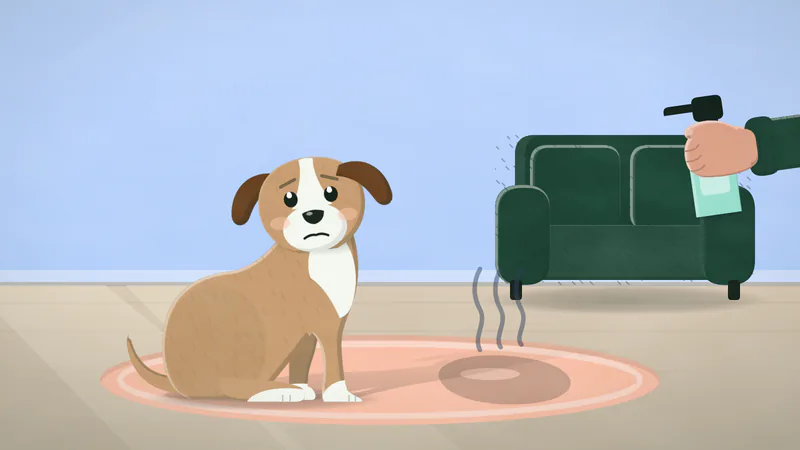
By the time your dog scratches, fleas are already laying eggs.
Pick the Seresto collar for flea and tick prevention for dogs that lasts up to 8 months, or Frontline Plus for a monthly spot-on.
In this guide
Collar, monthly drop, bath or vet chew: pick the one you'll keep up with.
The best flea and tick prevention for dogs fits his weight band, your home and your vet's advice. Collars, spot-on topicals, sprays and shampoos are sold over the counter.
What's in each one, at a glance
Seresto collar: Imidacloprid and flumethrin. One collar lasts up to 8 months.
Frontline Plus topical: Fipronil 9.8% and (S)-methoprene 8.8%. Once a month.
Adams Plus shampoo: Pyrethrins 0.15%, (S)-methoprene 0.1% and piperonyl butoxide 1.88%. Used at bath time.
Vet's Best spray: Peppermint oil 0.30%, eugenol 0.70% and sodium lauryl sulfate 2.70%.
Prescription chews: Your vet prescribes these, so that conversation comes first.
Prescription or over the counter: what you can buy without a vet
Read this sectionHide this section
Flea and tick chewables are prescription drugs approved by the FDA, so they come through your vet.
Collars, spot-on topicals and medicated shampoos are regulated by the EPA as pesticides.
Flea and tick safety: five rules before the first dose
These are pesticides, so the label is the instruction manual. Five rules cover most of it:
Weigh your dog first. Doses go by weight band, and puppies change bands quickly.
Dog products go on dogs only. Some dog-only products, such as those with permethrin, are toxic to cats.
One product at a time. Stacking is a vet question.
Read the label's own cautions. Each product's are quoted below.
Watch the next few days. If your dog scratches hard, drools or acts unwell after a new product, call your vet.
The four over-the-counter options, label by label
Seresto flea collar for dogs: imidacloprid and flumethrin
Seresto Flea & Tick Collar. Active ingredients: imidacloprid and flumethrin.
What's in it: Two pesticide actives, imidacloprid and flumethrin.
How often: One collar lasts up to 8 months.
Labeled for: This listing is the large-dog collar, for dogs over 18 lbs and at least 7 weeks old.
Worth knowing: In February 2024, EPA's Office of Inspector General reported that EPA had not yet completed its registration-review risk assessments for pets for these ingredients.
Ask your vet: Does the collar suit your dog's size and health, and the other pets in your home?
Frontline Plus topical: fipronil and (S)-methoprene
Frontline Plus Flea & Tick Treatment
The catch
Once a month. Put the day on your phone and you're set.
Skip it if
Your dog is under 89 lbs. This listing is the 89 to 132 lb dose, in a box of 3.
Frontline Plus Flea & Tick Treatment. Active ingredients: fipronil 9.8% and (S)-methoprene 8.8%.
What's in it: Fipronil 9.8% and (S)-methoprene 8.8%, on the EPA-accepted label, EPA Reg. No. 65331-5.
How often: Once a month.
Labeled for: This listing is the 89 to 132 lb dose, in a box of 3.
The label's own cautions: "Harmful if swallowed. Causes eye irritation." It also says to consult a veterinarian before using it on medicated, debilitated or aged animals.
Adams Plus shampoo: pyrethrins and (S)-methoprene
Adams Plus Flea & Tick Shampoo
The catch
Works on bath day. Pair it with an ongoing preventive for the months after.
Skip it if
You want months of prevention. The shampoo is a bath-day treatment; the Seresto collar lasts up to 8 months.
Vet's Best Flea & Tick Spray. Active ingredients: peppermint oil, eugenol and sodium lauryl sulfate.
What's in it: Peppermint oil 0.30%, eugenol (from clove) 0.70% and sodium lauryl sulfate 2.70% as actives, with water and sodium benzoate (the maker's ingredient list).
Worth knowing: The maker calls it "Certified Natural" and names no certifier. You reapply a spray more often than a collar or a monthly topical.
Labeled for: Dogs 12 weeks and up, and the home.
Let the coat dry before pets groom themselves or each other.
Ask your vet: is a spray enough where you live, or does it belong on top of a main preventive?
Doses go by weight band, so weigh your dog before every order.
Flea control for the home: treat every pet, then the house
The fleas you see on your dog are the small part of the problem. Their eggs fall off into bedding, rugs and couch cushions, which is why a dog can pick up new fleas right after a treatment.
Treat every dog and cat in the home on the same day, each with a product labeled for that species. One untreated pet keeps the cycle going.
For a dog with fleas right now, ask your vet whether a flea bath fits first, then start the prevention they recommend, as the directions say.
Wash your dog's bedding, blankets and couch throws in hot water.
Vacuum floors, rugs and the couch, then empty the vacuum outside. Keep vacuuming every few days for the next few weeks, since new fleas keep hatching from the house.
Fleas after a dose usually mean the house is hatching, not a failed product.
Tick protection on walks: check your dog every time
Prevention lowers the odds, but a tick check after woods, tall grass or trail walks still matters. Run your hands over your dog and look closely at the ears, around the eyes, under the collar, the armpits, between the toes and around the tail.
Found one? Take it off like this:
Grip it with fine-tipped tweezers as close to the skin as you can.
Pull straight out with steady pressure. Skip the heat, nail polish and petroleum jelly.
Clean the spot, and call your vet if it stays red or your dog seems off in the days after.
Long days on rough trails? Our guide to dog boots for paw protection covers the feet; the tick check still comes after.
When to start prevention: before the first scratch
Start before flea and tick season where you live, not after the first scratch. By the time your dog scratches, fleas are already laying eggs, and the eggs drop into the carpet, the dog bed and the couch. (Egg-laying starts 24 to 48 hours after a flea first feeds, per the Merck Veterinary Manual.)
Your vet knows when your local season starts.
Warm climates often need prevention all year. Ask your vet what your area needs.
Don't skip months: A gap gives fleas time to settle into the house.
Start sooner, or keep going longer, if:
Your dog swims, hikes or runs through tall grass or woods.
Your dog goes to daycare, boarding or the dog park.
Another pet in the house goes outside.
You're traveling somewhere warmer than home.
Make the schedule stick: pair every dose with a treat and a fixed date, like the first of the month. A dog who expects a snack holds still for a spot-on.
Same date every month: one gap lets fleas settle back into the house.
Questions to ask your vet before you choose
The right product depends on your dog, your area and who else lives with you. Bring these to the next visit:
Which parasites are common where we live: fleas, ticks, or both?
How often does my dog need a dose, and does that change in winter?
Which weight band and minimum age fit my dog?
Does my dog's health history, such as seizures, rule out any type?
We have a cat. Which dog products are risky around cats?
Can I combine a collar, a topical and a spray, or is one enough?
What should I do if my dog reacts to a product?
For a topical, follow the wash-off directions on the box.
Which flea and tick prevention is right for my dog?
It depends on your dog's size, age and health, the parasites where you live, and who else shares the house. Take the label facts above to your vet and choose together.
Is there a plant-oil flea and tick option?
Some sprays use plant oils, such as Vet's Best with peppermint oil and eugenol (plus sodium lauryl sulfate). They are still pesticides, and the maker's "Certified Natural" names no certifier.
Ask your vet whether one fits on its own or alongside a main preventive.
How do I know if my dog has fleas?
Signs include: excessive scratching, biting at the base of the tail, "flea dirt" (tiny black specks) in the coat, red irritated skin, and hair loss.
Comb your dog with a fine-tooth flea comb over a white paper towel to check. Small dark specks that turn reddish when wet are flea droppings.
When does flea season start?
It depends on where you live. Fleas pick up as the weather turns warm and humid, and in mild climates they can be around all year.
Start prevention before you see scratching, and ask your vet when the season starts locally.
When should I start flea prevention for a puppy?
Only use a product labeled for your puppy's age and weight. Ask your vet at the first checkup which product fits and when to start, then reweigh your puppy before each dose, since puppies change weight band quickly.
Which flea and tick medication needs a prescription?
Prescription chews include NexGard, Simparica, Credelio and Bravecto. The over-the-counter options on this page don't need one. Ask your vet which route fits your dog.
Why do I still see fleas after starting prevention?
Usually because new fleas are still hatching in the house, not because the product failed.
Keep up the dose, treat every pet, wash bedding and vacuum often for a few weeks. Still seeing plenty of fleas after that? Ask your vet about switching.
Considered, didn't make it
Prescription chews (NexGard, Simparica, Credelio, Bravecto): prescription only, so they come through your vet, not a shop link.
Before you buy: bring this list to your vet
Bring this list to your vet with your dog's weight and a note on any other pets at home, and choose together.