Dog dental treats vs professional dental cleaning. Can't brush daily? What a chew does, and what needs the vet.
A dental treat works on the tooth surfaces it touches. Only a vet cleaning reaches below the gumline. How to tell which one your dog needs now, and what to do between visits.
A treat cleans above the gumline; only a vet cleaning reaches below it.
Only a vet cleaning reaches below it.
Between visits, give a VOHC-accepted treat like Greenies Original Regular.
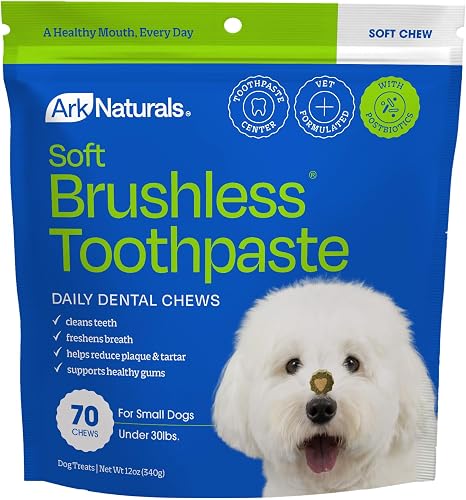
Ark Naturals Brushless Toothpaste suits a small dog who dodges the brush.
Tartar, red gums or bad breath already? Book the vet exam first.
In this guide10 sections
The checkup is over, and the dental cleaning estimate is on the fridge. Next to it sits a bag of chews that says "cleans teeth". So which does your dog need now: dental treats or a professional cleaning? Five steps answer that before you book or buy.
Lift your dog's lip in good light and look at the back teeth for brown or yellow crust along the gums.
See tartar or red gums, or smell bad breath? Book a vet exam before you buy another chew.
Mouth looks clean? Give a VOHC-accepted chew as the bag directs, like Greenies Original Regular for a 25 to 50 lb dog (see Greenies Original Regular at Amazon).
Watch the first few chews. If your dog gulps one in two bites, go up a size or switch to a water additive.
Brush on the days your dog allows it, and keep the yearly checkup so the vet can see below the gumline.
Your vet and that label are both right, about different parts of the tooth. Think of it as above the gumline versus below it: a treat works on the first, and only a professional dental cleaning at the vet reaches the second.
Your vet and that label are both right, about different parts of the tooth.
Which one to get
Get a dental treat if your vet says the mouth looks good, or your dog won't let you brush. Choose a VOHC-accepted one and keep the checkups.
Get a professional cleaning if you see tartar, red gums or bad breath. Book the vet exam first: a treat won't undo what's there.
The picks side by side
Pick
Best for
The catch
Our pickGreenies Original Regular Natural Dental
Plaque and tartar on 25-50 lb dogs
Not for aggressive chewers. Pick a different treat for a hard chewer.
Also greatArk Naturals Brushless Toothpaste
Small senior dogs who dodge brushes
Soft texture means the tube goes faster.
Dental treats vs professional dental cleaning, side by side
A dental treat can
Scrape some plaque off the tooth surfaces it touches, if your dog really chews it
Help slow tartar buildup, when it's a product with data behind it (look for the VOHC seal)
Make the days you skip the brush count for something
A dental treat can't
Clean below the gumline
Remove tartar that has already hardened
Find a cracked tooth, a loose tooth or an infection
Do anything if your dog swallows it in two bites
A professional cleaning under anesthesia can
Scale tartar off above and below the gumline, then polish the teeth
Let the vet check every tooth, and take dental X-rays if needed
Treat problems on the spot, like a tooth that needs to come out
Signs your dog needs the cleaning, not another chew
Wondering if the cleaning can wait? Check for these. A treat is a maintenance tool: once one of them shows up, the job belongs to the vet.
Hard brown or yellow crust on the teeth, often worst on the big back teeth.
A red line or bleeding where the gum meets the tooth.
Breath that stays bad even with a daily chew.
Eating changes: chewing on one side, dropping food, or walking away from the hard kibble.
Pawing at the mouth or a tooth that looks loose or broken.
It starts with an awake exam. The vet looks at the teeth and gums and decides whether a cleaning under anesthesia is due. Your vet may also run bloodwork before the anesthesia; ask what the visit includes.
On the day, your dog is asleep, so the vet can work below the gumline, chart every tooth and take X-rays of the roots you can't see from outside. Then the teeth are polished smooth, which gives new plaque less to grip.
Read the estimate line by line before you book. It should list the exam, anesthesia, X-rays and any possible extractions. If it doesn't, ask for one that does, so the extra work found on the day isn't a surprise on the bill.
Why "anesthesia-free cleaning" isn't the middle ground
If anesthesia is the line that makes you hesitate, you'll soon hear about a shortcut: some groomers and clinics offer to scrape teeth while the dog is awake. The American Veterinary Dental College says this is not a replacement for dental procedures done under anesthesia. It can't reach below the gumline, and a shiny surface can hide a problem that keeps getting worse.
Picking a treat that earns its place
Back from the vet, the chew becomes the upkeep crew, so make it one that has proved itself. VOHC (the Veterinary Oral Health Council) awards its seal only after reviewing data that a product controls plaque, tartar or both when used as directed. Check the exact product on vohc.org: a seal on one size or flavor doesn't always cover the whole line.
Size it right. Too small gets swallowed whole; too big can frustrate a small dog.
Watch the first few. Look for real chewing. A gulped chew does nothing for the teeth.
Count the calories. Daily treats add up, so trim the meal a little.
The catch
It contains wheat, so a grain-free dog needs another pick from the VOHC list below.
Skip it if
Your dog is an aggressive chewer. Add a TropiClean water additive to the bowl instead.
Small dog who dodges the brush? Ark Naturals Brushless Toothpaste is a toothpaste-coated chew made for that dog (read the Ark Naturals Brushless Toothpaste pick). The catch: it isn't on the VOHC list, so use it as an extra on top of a VOHC-accepted product, not in place of one.
Tartar is back soon after a cleaning: a treat only works on the surfaces it rubs. Add brushing, even a few times a week, and ask your vet what else fits.
Your dog is putting on weight: the chew counts as food. Take a little off the meal, or ask your vet about a lower-calorie option.
Upset stomach after the chew: stop it and check the ingredients. Greenies Original contains wheat, so a dog who reacts to grain needs another product from the VOHC list.
Mistakes that let tartar win
Read this sectionHide this section
Skip these
Checking only the front teeth. The small front teeth can look fine while the big back ones carry the crust. Lift the lip at the side.
Buying stronger chews to fix tartar that's already there. Hardened tartar needs scaling. A harder chew only adds a risk of a broken tooth.
Skipping the yearly exam because the breath seems fine. A cracked tooth or an infection below the gumline doesn't always smell. The exam is how you find out.
Our verdict: brush first, treat second, vet for the reset
Your dog needs both, in that order. Estimate on the fridge? Book the cleaning, then start the brush and a VOHC-accepted chew once your vet clears the mouth. VOHC calls brushing the gold standard of home care, so the treat is the backup and the cleaning is the reset. Our step-by-step brushing guide walks you from "no way" to a short daily routine. For every chew we'd buy, see the best dog dental care picks.
Wondering whether Greenies do anything at all? Read the Greenies dental treats review for what the seal covers and where it stops.
No. A treat only works on the surfaces it rubs while your dog chews, and VOHC calls brushing the gold standard of home care. Use a VOHC-accepted treat as the backup on the days the brush loses.
Do dental treats remove tartar?
Not tartar that has already hardened. A VOHC-accepted treat can slow new tartar on the teeth it touches, but the crust that's already there comes off only with scaling at the vet.
Is anesthesia-free dental cleaning a good alternative?
No. The American Veterinary Dental College says it is not a replacement for dental procedures done under anesthesia. An awake scrape can't reach below the gumline, and clean-looking teeth can hide a problem that keeps getting worse. Ask your vet if anesthesia worries you.
Are Greenies Original Regular right for a small dog?
Regular is sized for dogs of 25 to 50 lb. A smaller dog needs a smaller size from the same line, such as Teenie. Match the weight on the bag, and check that the size you pick is on the VOHC list.