Still not working?Common mistakes. Brushing over a sore tooth: get the mouth checked first, or you teach your dog to dread the brush.
The short answer
Get the mouth checked first, then brush gently with a finger brush and an enzymatic dog toothpaste, a few teeth at a time, in short sessions. Never use human toothpaste. Flinching, bleeding or dropped food means stop and call your vet.
In this guide
Old dog flinching at the brush? Go softer and slower, not harder. Five steps: a vet check first, then a finger brush, an enzymatic dog toothpaste and short sessions lying down.
Get the mouth checked first. If there's a painful tooth, brushing on top of it will only teach your dog to dread the brush.
Choose soft tools: A finger brush or an extra-soft brush, and an enzymatic dog toothpaste like Vet's Best Enzymatic Dog Toothpaste (see it at Amazon). Never human toothpaste: some contain xylitol, which the ASPCA lists as dangerous to pets.
Go slower than you would with a young dog: lips first, then a finger along the gums, then a few teeth. Our step-by-step brushing guide has the day-by-day version.
Keep sessions short and comfortable. Lying down on a soft bed is fine. Many seniors with stiff joints prefer it to sitting.
Watch the gums for a few days. Bleeding, swelling or flinching at one spot means stop and book the vet.
You'll need
A finger brush or an extra-soft dog toothbrush.
An enzymatic dog toothpaste. Never human toothpaste: some contain xylitol, which the ASPCA lists as dangerous to pets.
A soft bed or towel, so a stiff senior can lie down for it.
What's different about an older mouth
More need for scaling. Ask your vet whether your dog needs a professional scaling.
Worn, cracked or missing teeth. Chewing that was fine at three may hurt at twelve.
Sensitive gums. A stiff brush or a fast, rough pass can make an older dog hate the routine.
Quieter pain. Seniors can keep eating with a sore mouth. Changes in chewing are the clue.
Chews and treats for worn teeth
Swap very hard chews (bones, antlers, hard nylon) for softer options. Hard chews can crack teeth at any age, and older teeth have less to spare. Browse chews in our dog dental health picks.
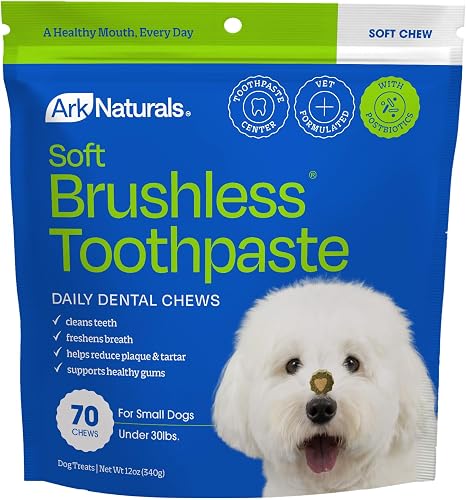
For small seniors who won't take a brush, a soft brushless chew with a toothpaste layer is a gentle add-on. It doesn't do what brushing does, and it counts toward the day's calories.
"Is my dog too old?" is a common worry, and it's a question for your vet. Age alone doesn't decide it. Your vet looks at your dog's overall health and the state of the mouth.
Questions worth asking at the appointment:
What do you see in the mouth now, and what happens if we wait?
What checks do you run before anesthesia for an older dog?
How will you monitor my dog during the procedure?
Are any teeth likely to come out, and how will my dog eat afterward?
What does recovery look like at home?
Skip "anesthesia-free" cleanings as the alternative. The American Veterinary Dental College says they are not a replacement for dental procedures under anesthesia, because they can't reach below the gumline.
Common mistakes
Read this sectionHide this section
Skip these
Brushing over a sore tooth: get the mouth checked first, or you teach your dog to dread the brush.
Reaching for human toothpaste: some contain xylitol, which the ASPCA lists as dangerous to pets. Use an enzymatic dog toothpaste.
Using a stiff brush or a rough pass: sensitive gums turn an older dog against the routine. Go slower and softer.
Handing out very hard chews: bones, antlers and hard nylon can crack teeth, and older teeth have less to spare.
Choosing an anesthesia-free cleaning: the American Veterinary Dental College says it is not a replacement, because it can't reach below the gumline.
Signs to call the vet
Bad breath that keeps getting worse
Red or bleeding gums
A loose or broken tooth
Chewing on one side, dropping food or pawing at the mouth
The remaining teeth and the gums still collect plaque. Gentle cleaning of what is left keeps the mouth comfortable. Beyond the mouth, our senior support picks cover joints, beds and everyday comfort.