Waiting until your dog stops eating is waiting too long. By then the mouth may have been sore for a while.
The 60-second mouth check
Do this once a week, ideally when your dog is sleepy and relaxed. Treat after.
Smell. Get close. Note anything new or stronger than usual.
Lift the lip on each side. Look at the big back teeth and the canines, where the gum meets the tooth.
Check the gums. Healthy gums are usually pink (some dogs have dark patches, which is normal for them). Look for a red line at the gumline, swelling or bleeding.
Glance at the face. Compare both sides under the eyes and along the jaw.
8 signs of dog dental problems
Bad breath: Dog breath is never minty, but breath that clears a room can mean bacteria are building up on plaque and tartar. Bad breath can also come from something your dog ate or from problems outside the mouth. That's one more reason to let the vet find the cause instead of covering it up with a spray.
Red or bleeding gums: A red line along the gumline, gums that look puffy, or blood on a chew toy are early signs of gum inflammation. It's the stage worth catching.
Brown or yellow buildup: Tartar is hardened plaque, the brown or yellow crust on the teeth. Brushing can't remove tartar once it sets. That's a cleaning job for the vet.
Loose, broken or discolored: A tooth that wiggles, a chipped tooth from a hard chew, or a tooth that turns gray or pinkish needs a vet look. A discolored tooth can mean the inside of the tooth is damaged, even if your dog acts fine.
One-sided chewing: Watch your dog eat. Tilting the head, chewing only on one side, dropping kibble or swallowing it whole when they used to crunch can all mean something hurts.
Pawing at the mouth: Doing it, or rubbing the face on the carpet, especially after eating, is often a dog's way of saying "this hurts".
New drooling: Extra drool, especially with blood in it or a bad smell, is a reason to call.
Facial swelling: Below the eye or along the jaw, it can come from a tooth root problem. Call the vet the same day for this one.
Normal or worth a call?
Some of the 8 signs have a harmless twin. Here is how to tell them apart.
Breath: breath that smells like dinner is just dog. Breath that is new, stronger than last week, or clears the room is worth a call.
Gum color: dark patches that have always been there are normal for that dog. A red line at the gumline, puffy gums or bleeding are not.
Puppy teeth: a puppy losing baby teeth, with a spot of blood on a toy, is normal. A baby tooth still in place next to the adult tooth that replaced it needs a vet look.
Eating: a dog who skips one meal on a hot day may just not be hungry. A dog who turns down the hard treats they used to beg for, or eats slower every week, may have a sore mouth.
Signs that mean call today
Facial swelling
Your dog won't eat or drink
A broken tooth with something pink or red showing in the middle
Bleeding from the mouth that doesn't stop
When your dog won't let you look
Read this sectionHide this section
Some dogs clamp shut the second a hand gets near the face. You don't need the jaw open to do the check.
Lift only the outer lip at the side. The back teeth and canines show without opening the mouth.
Do one side today and the other tomorrow. A short look beats a wrestling match.
Pick a sleepy moment, like after a walk, and give the treat right after.
Never force the mouth open. If your dog pulls away or growls only when you touch one side of the face, stop and tell the vet. That reaction is worth mentioning on its own.
Still can't see anything? Watch a meal instead. How your dog chews tells you a lot about how the mouth feels.
What the vet will do
Read this sectionHide this section
Your vet will look in the mouth and, if needed, recommend a cleaning and exam under anesthesia. That's how they check below the gumline and take dental X-rays. Ask about cost and what to expect before you book, so there are no surprises.
A sore mouth can look fine on the exam table. Bring notes so the vet knows where to look.
Which sign you saw, and on which side of the mouth.
When you first noticed it, and whether it is getting worse.
Any change at mealtime, such as eating slower or skipping hard treats.
A phone photo of the gum or tooth, if your dog let you take one.
What you use at home now: brush, toothpaste, chews or a water additive.
After the vet: keep it from coming back
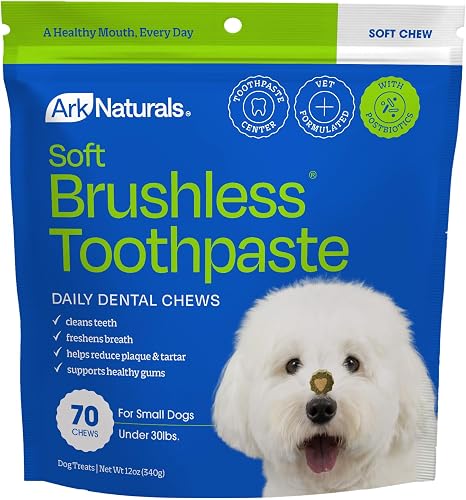
Once the mouth is clean, daily brushing is what keeps it that way. Our dog dental care guide has the full routine, and how to brush your dog's teeth walks through the first week. For small seniors who won't take a brush, a soft brushless chew is a gentle add-on. More picks live in dog dental health.
The catch
It's an add-on after the vet visit, not a fix for a sign that's already there. It also isn't on the VOHC accepted list, so it's a routine helper, not a sealed tartar product.
Skip it if
Your dog is large. Ark is made for small dogs.
Common mistakes
Read this sectionHide this section
Skip these
Waiting until your dog stops eating: a dog can keep eating and wagging with a sore mouth.
Covering bad breath with a spray: let the vet find the cause instead.
Human toothpaste: some contain xylitol, which the ASPCA lists as dangerous to pets.
Scraping tartar off yourself: you can hurt the gums, and the part that matters is under the gumline.
Counting on a chew to fix a sign that is already there: a chew is routine upkeep. It can't fix a sore tooth.
Checking only the front teeth: lift the lip at the sides, where the big back teeth and canines sit.
Calling it old age: an older dog who eats slower may have a sore mouth, not just a tired one. Our senior dog dental care routine is built for the old dog who flinches.
Our verdict: look weekly, book on any sign
Dog dental problems hide well, so the job is yours: a 60-second look each week and one watched meal. Any of the 8 signs means book the vet.
Swelling, a broken tooth with pink showing, bleeding that won't stop, or a dog who won't eat or drink: call today. Brushes and chews are upkeep after the vet, never the fix.
At every regular checkup. If the vet doesn't mention the mouth, ask them to take a look.
How do I know if my dog has a toothache?
Watch them eat. Chewing on one side, tilting the head, dropping kibble, pawing at the mouth or new drooling can all mean something hurts. Facial swelling means call the vet the same day.
What does dog gum disease look like?
Early on: a red line at the gumline, puffy gums or blood on a chew toy. Brown or yellow tartar on the back teeth comes next, and only a vet cleaning removes it.
Why does my dog's breath smell so bad?
Most often it's plaque and tartar. It can also be something eaten or a problem outside the mouth. If it's new or getting worse, get it checked.
Can a tooth infection make my dog seriously sick?
It can become serious if it's left untreated, and it's painful either way. Facial swelling, unusual tiredness or not eating: call the vet the same day.
Is it normal for a puppy to lose teeth?
Yes. Puppies lose their baby teeth as the adult teeth come in, and a spot of blood on a toy is normal. A baby tooth still in place next to the adult tooth is worth a vet look.
Will a dental chew fix my dog's bad breath?
Not if the cause is tartar or a sore tooth. A chew is daily upkeep. Brown buildup needs a vet cleaning, and breath that is new or getting worse needs a check first.