Simple ingredients, cruelty-free first

Fixes for cat bad breath you can do at home. Cat breath like last week's tuna?

Treats, a brush or a water additive: pick what your cat tolerates. Red gums, drooling or pain: see the vet.

Our pick is a daily dental treat that is VOHC Accepted. Won't eat treats? A powder on her food.

Red gums, drooling or pain: see the vet.

The catch: It's a treat, so pair it with brushing when your cat lets you, and keep the vet cleanings.

Our pick

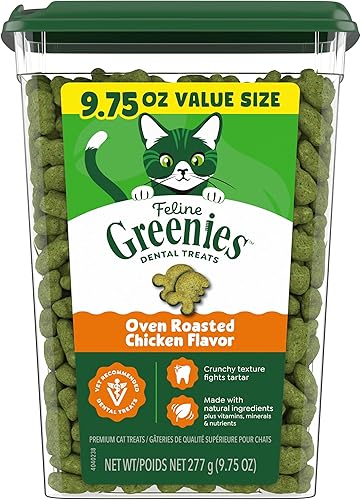
Feline Greenies Dental Treats (Roasted Chicken)

Best forTartar, as a daily treat

Seal: VOHC Accepted for cats: tartar.

The catch
It's a treat, so pair it with brushing when your cat lets you, and keep the vet cleanings.
Skip it if
Your cat won't eat treats. Sprinkle ProDen PlaqueOff powder on its food instead.
Check price at Amazon

Other situations

ProDen PlaqueOff Powder for Cats & Dogs

Best forPlaque care with no brushing

Seal: VOHC Accepted for plaque and tartar.

The catch
Give it a few weeks of daily sprinkles before you judge it.
Skip it if
Your cat is fussy about food. Kelp taste puts some picky cats off; grab Feline Greenies treats instead.

Jasper Microbrush Cat & Dog Toothbrush

Best forA cat or small dog new to brushing

Why this one: Extra-soft bristles, made for sensitive mouths.

The catch
Extra-soft bristles won't shift heavy tartar.
Skip it if
Tartar has already built up. That's a vet job first; brush after.

Cat dodges the toothbrush? See the best cat dental care

More fixes for this mess

Show more fixes3 picks

Cat bad breath: questions before you buy

What does VOHC-accepted mean?

The Veterinary Oral Health Council (VOHC) reviews the maker's submitted trial data against its standard. VOHC-accepted means the product met that standard for plaque, tartar, or both. The seal says which. It's the quickest way to spot a dental product with trial data behind it.

Are dental chews enough?

Dental chews help, but they work best combined with brushing or water additives. Think of them as one part of a complete routine.

Can I use human toothpaste?

Never. Human toothpaste contains xylitol and fluoride, which are toxic to pets. Always use pet-specific toothpaste.

How often should pets get professional cleanings?

Generally annually, but some pets need more frequent cleanings. Your vet can assess during regular checkups.

My pet won't let me brush. What can I do?

Start with water additives and dental chews. Gradually introduce brushing with tasty pet toothpaste. Patience and positive reinforcement help.

Every mess, every pick, catch included

