Paw wax covers most salted, icy and hot walks. When to step up to waterproof, heavy-duty or rubber boots, how to measure for a fit, and paw care after the walk.
The best paw protection for most dogs is paw wax: rub Musher's Secret on the pads before a salted, icy or hot walk. Wet, slushy walks call for waterproof boots like QUMY; rough trails or deep winter, Ultra Paws. Measure paw width before you order any boot.
In this guide
Step up to boots for wet slush, ice balls between the toes, deep cold or rough trails, and measure the paw before you order. Wax or boots, rinse the salt off after every winter walk.
Wax or boots: pick by the problem
Salt and de-icers: Wax plus a rinse after the walk, or boots for long walks. Salt still on the paws at the door? Our paw wipes for dogs do the wipe-down.
Ice balls between the toes: boots, or trim the long fur between the pads so snow has less to cling to.
Hot pavement: Wax for short walks, boots for long ones. If it's too hot for the back of your hand, it's too hot for paws.
Wet slush and mud: waterproof boots.
A dog who fights boots: wax, or thin rubber boots.
Dry or cracked pads: a dog paw balm at home after the walk. Wax goes on before the walk; deep or bleeding cracks are a vet visit.
Wax you actually use beats boots that live in a drawer.
Paws are one part of the cold-weather routine. For short walks, ice and staying visible in the dark, see our winter walking safety tips for dogs.
Thin rubber boots that slip on like a balloon, with no straps. Reusable a few times before you toss them.
The catch: No insulation, and thin rubber can puncture on rough ground.
Skip it if: Your walks are on rough trails or in deep cold. Go Ultra Paws.
Measure the paw before you buy boots
Boot sizes go by paw width, not by the dog's weight or breed. A boot that's too wide twists and comes off; one that's too narrow rubs. Five minutes with paper and a ruler saves a return.
Trim the nails first, so they don't push against the toe of the boot.
Stand your dog on a sheet of paper with weight on the paw. Lift the opposite paw if you need to, so the toes spread like they do on a walk.
Mark both sides of the widest part of the paw, then the tip of the longest nail and the back of the pad.
Measure between the marks and match the width to the maker's size chart.
Measure a back paw too. Front and back paws can need different sizes.
Check for dew claws (the small claw higher up the inside of the leg). A boot cuff that sits on one will rub it.
How to get a dog to wear boots
Start with Pawz. They're the thinnest.
Let your dog sniff the boots, then put them on indoors.
Treat every step at first.
Start with the front paws only, and add the back ones later.
Still a battle? Switch to wax.
Boots slipping off or rubbing: fix the fit
Twists or slides off mid-walk: usually too wide, or the strap is loose. Remeasure the paw and pull the strap snug around the leg.
Red marks after the walk: too tight, or the cuff sits on a dew claw. Try the next size up, or a boot with a lower cuff.
High-stepping like the floor is lava: normal at first. Keep the first sessions short and indoors, and they settle into a walk.
Rinse, dry and check paws after winter walks
Salt and de-icer ride home on the pads and in the fur between the toes, and dogs lick their paws. Rinse or wipe each paw at the door, then dry between the toes.
Look at the pads while you dry them. Cracks, small cuts and red skin between the toes are easier to spot on a clean paw. For the full routine and the tools for it, see how to clean your dog's paws after a walk.
Limping, deep cracks or swelling: call your vet
Wax and boots protect healthy pads. They don't fix a sore one. Call your vet if you see any of these:
Limping that lasts after the walk
A crack that bleeds or looks deep
Swelling, heat or redness between the toes
Discharge or a bad smell from the paw
Licking or chewing at one paw that doesn't stop
Ask before you put a boot or wax on a hurt paw.
Considered, didn't make it
Boots for every walk: for most walks, paw wax is the simpler pick. Boots are for the walks wax does not cover.
Wax on long, slushy walks: it needs reapplying before each walk, so waterproof boots do better there.
Our verdict
Wax first, boots for the walks wax can't cover. Match the pick to your walk:
Salted or hot sidewalks: Musher's Secret, rubbed on before you head out.
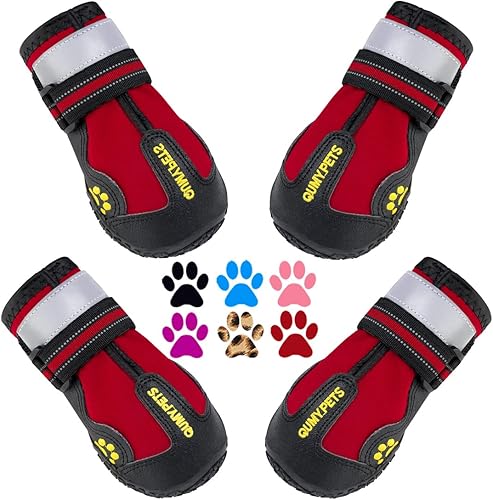
Wet slush and snow: QUMY waterproof boots, unless your dog has wide paws.
Deep cold or rough trails: Ultra Paws, with a few short walks to get used to the bulk.
A dog who fights every boot: Pawz first, then back to wax.
Most dogs don't for everyday walks. Wax or boots help on salted roads, hot pavement and rough trails. Ask your vet about boots if your dog has a paw injury.
Is paw wax better than boots?
For everyday walks, yes: it is easier, and there is nothing to kick off. Boots win in deep snow, on very rough ground and on long hikes.
Does my dog need boots on hot pavement?
Not for a short walk: wax does it. For a long one, yes. Quick test: if the pavement is too hot for the back of your hand, it's too hot for paws.
How often should I put paw wax on my dog?
Before each walk on salt, ice or hot pavement, because it wears off as your dog walks. Use the amount the directions call for, and wipe off any extra so less ends up on your floors.
Is it OK if my dog licks paw wax?
Use a wax made for dogs, never a lip or hand balm made for people. Musher's Secret describes its wax as food-grade. If your dog licks off a lot of it, or the paws look sore, ask your vet.
What size dog boots should I get?
Go by paw width, not weight. Stand your dog on paper, mark both sides of the widest part of the paw and measure between the marks. Match that to the maker's size chart, and measure a back paw too.
Still deciding? Get this one.
Musher's Secret Paw Wax
Best for: Dogs who refuse boots, on salted sidewalks and short icy or hot walks