The fix in 3 steps

Our pick for this:
Pet Training Clicker with Wrist Strap
The catch: Timing is the skill. Click the instant the behavior happens, then treat.
In this guide
Your dog sits beautifully in the kitchen and has never heard of you at the park. That's not stubbornness. The park is paying better than you are.
Positive reinforcement fixes that: mark the exact moment your dog gets it right, then pay right away with something they want. Don't let the reward arrive late. A treat three seconds after the sit pays for whatever your dog was doing at second three.
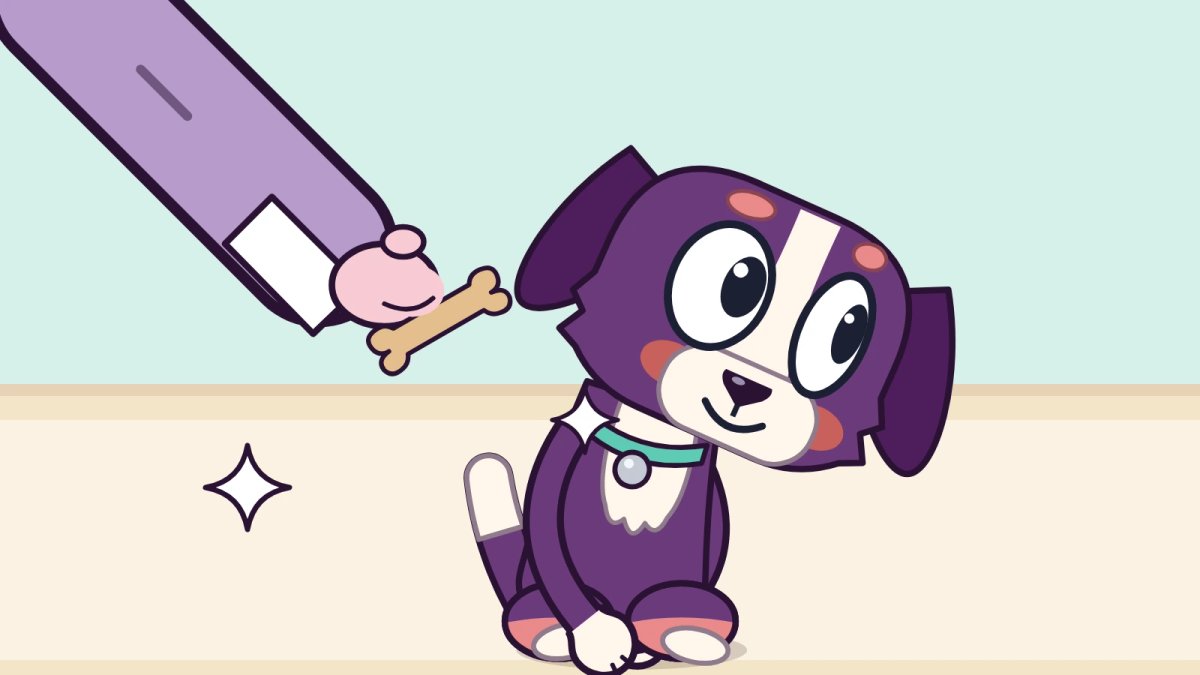
The loop: cue, mark, pay
- Cue: say it once. "Sit."
- Mark: the instant the behavior happens, say "yes" or click. That's the snapshot that tells your dog which bit earned the reward.
- Pay: treat within a second or two of the mark.
That's the whole system. Everything else is timing and pay rates.
Pick your marker: a word or a clicker
A marker is a sound that means "that, exactly that, and food is coming". Both kinds work.
- A marker word like "yes" is always with you. Say it the same short way every time, and don't use it in normal chat.
- A clicker sounds identical every time, which makes it extra clear. The catch: you need a free hand and good timing, and some noise-sensitive dogs don't like the click.
Either way, charge it first: mark, treat, mark, treat, ten times in a quiet room, with no cue. Your dog learns that the sound means food before you use it for training. Dog flinches at the click? See how to help a clicker-shy dog.
Set your pay rates
Not all treats are equal. Match the treat to how hard the job is.
- Easy job, quiet room: kibble from the day's meal, or a small dry treat.
- Medium job, new place: soft training treats, broken small.
- Hard job, big distraction (recall at the park): the good stuff, like small bits of cooked chicken or cheese, plus a jackpot of several treats in a row for a great rep.
More options by size and calories are in our training treats roundup. Count treats as part of the day's food, and trim meals on heavy training days. Tools for the training session live in our training and behavior aid picks for dogs.
Your first 5-minute session: teach "down"
Read this sectionHide this section
- Hold a treat at your dog's nose, then lower it slowly to the floor between the paws.
- The moment the elbows touch the floor, mark and pay.
- After a few reps, do the same hand motion with no treat in that hand. Mark and pay from the other hand. Now the hand is the signal.
- Once your dog follows the empty hand, say "down" just before the motion.
- Stop while it's still fun. Short sessions beat long ones.
Moving it to the real world
A behavior isn't learned until it works in new places. Practice in the kitchen, then the yard, then the quiet end of the street, then the park. Each new place, make it easier and pay more for a while. If your dog can't do it, the step was too big. Make it smaller.
Mistakes that slow everything down
Read this sectionHide this section
Skip these
- Repeating the cue. "Sit, sit, SIT" teaches that the real cue is the third one.
- Bribing instead of rewarding. If the treat has to be visible before your dog listens, fade the lure (step 3 above) sooner.
- Marking late. Mark the sit itself. By the time your dog looks up, proud, you've missed it.
- Punishing the misses. Ignore the wrong answer, reset and make the next try easier.
Does it work for big problems too?
Yes. Reward-based trainers use it for pulling, jumping and recall too.
For fear, growling or anything bite-related, work with a certified trainer or a veterinary behaviorist rather than a book. Some of those problems have a medical side your vet should check first.
Quick answers
Will my dog only listen when I have treats?
Not if you fade them on purpose. Once a behavior is solid, pay every second or third rep, then mix in praise, play and life rewards like opening the door to the yard.





