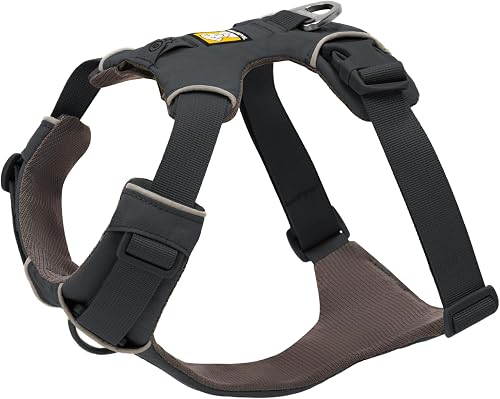
Yes, mostly: a front-clip harness like the Ruffwear Front Range turns a puller toward you, so pulling pays less. It does not teach alone, so add treats and stop when the leash goes tight.
Yes, mostly: a front-clip harness like the Ruffwear Front Range turns a puller toward you, so pulling pays less.
It does not teach alone, so add treats and stop when the leash goes tight.
In this guide7 sections
You clip on the leash and your arm is out straight before the end of the driveway. A front-clip harness helps, and it helps most when you pair it with a few habits. These four do the work.
Clip the leash to the front ring at his chest.
Check the fit. Two fingers should slide under every strap.
Stop when the leash goes tight, and walk on when it goes slack.
Reward the slack leash with a small treat at your side.
How does a no-pull harness work?
It moves the leash ring from his back to his chest. When he surges ahead, the leash turns his chest back toward you, so charging gets him nowhere. A back-clip harness gives him nothing to turn against, and a dog who pulls into a back ring can lean into it like a sled dog.
The picks side by side
Pick
Best for
The catch
Our pickRuffwear Front Range All-Day Adventure
Best forPullers and all-day walkers
The catchMore harness than a casual walker needs: four adjusters and padded panels built for pullers and long days.
Also greatPetSafe Easy Walk No-Pull Dog
Best forFirst-time harness users
The catchSlips sideways on some barrel-chested breeds. Check the fit before the first walk.
Will a no-pull harness stop my dog pulling by itself?
No. It makes pulling less rewarding, but he still learns the habit from what you do on the walk. Stopping when the leash is tight and moving when it is slack teaches him what you want. The harness just keeps the tug-of-war from winning him ground while he learns.
Moderate pullers: usually yes. The front ring takes the pull out of the walk.
Very strong pullers: it helps, but expect to use treats and practice as well.
Dogs who lunge at other dogs or squirrels: a harness gives you more control, not a fix. Ask a trainer.
Barrel-chested or fluffy dogs: fit matters more. A harness that slips sideways loses the benefit.
Front clip or back clip: which ring do I use?
Front ring while he is learning, and on any walk where he hauls. Back ring for slow sniffing strolls. A harness with both rings covers both jobs. The front clip vs back clip guide has the full call.
Why does my dog still pull in a no-pull harness?
The leash is on the back ring. Move it to the front.
The harness is loose or has rotated. Redo the finger check.
Pulling still pays off. If he gets where he wants to go while the leash is tight, he will keep doing it.
The walk is too exciting. Try a quieter street first.
For most dogs who pull, Ruffwear Front Range All-Day Adventure Harness. The front ring turns a puller toward you, and the padded chest and belly panels make it comfortable for long walks. The catch: four adjusters to set, so budget a few minutes for the first fitting.
If he suddenly pulls much harder than usual, limps, or seems sore after walks, ask your vet. If pulling comes with lunging, barking at other dogs or fear on walks, a trainer will do more than a different harness.
They help. A front ring turns a pulling dog back toward you, so pulling stops paying off. They work best with treats and with stopping when the leash goes tight.
Is a no-pull harness better than a collar?
A harness spreads the pull across the chest and shoulders instead of the neck, and a front ring gives you steering. Many people find it easier on both ends of the leash.
Which ring do I clip a no-pull harness to?
The front ring at the chest while he is learning or when he pulls. The back ring is for relaxed walks.
Can a dog still pull in a no-pull harness?
Yes. A harness reduces pulling but does not teach by itself. Fit, ring choice and rewarding a slack leash all matter.