Dog calming treats and calming products. Thunder rolls in, dog behind the toilet? Start with a snug wrap.
Thunder, an empty house or the drive to the vet: each trigger needs a different calming aid. A pressure wrap, a plug-in diffuser, two chews for after your vet's OK, setup tips, a guest plan, and what to try next.
A pressure wrap (our pick is the ThunderShirt Classic) handles noise and travel, and the ThunderEase plug-in handles time alone.
A calming chew comes only after your vet's OK.
Fear that keeps growing belongs with the vet.
In this guide12 sections
Thunder rolls in, and your dog is wedged behind the toilet, panting. Sweet talk won't reach that. A calming aid that fits the trigger can, if it is set up before the bad moment. Five steps:
Spot the trigger: Noise, an empty house, the car, strangers, or nerves with no clear cause.
Storm, fireworks or a car ride: fasten the ThunderShirt Classic before the first boom or the engine starts.
Home alone or just moved: plug in the ThunderEase diffuser in the room your dog uses most, days before the stressful stretch.
Thinking about a calming chew? Get your vet's OK, then stick to the label's dose and timing.
Panic, an injury, or fear that grows week to week: book a vet visit.
Don't scold a scared dog or drag it out of hiding. Let it settle where it feels safe, then pick a product by trigger.
What sets your dog off
Name the trigger first. A dog who falls apart in the back seat has travel anxiety, not a noise problem. The common ones:
Noise anxiety: Thunderstorms, fireworks, construction, and loud appliances
Separation anxiety: Distress when left alone, even for short periods
Travel anxiety: Car rides, new environments, and motion sickness
Social anxiety: Fear of strangers, other dogs, or crowded spaces
Generalized anxiety: Persistent nervousness without a clear trigger
Not sure which one? Watch when it starts. Panting at the first rumble points to noise. Pacing or chewing at the door after you leave points to time alone. Trembling once the car moves points to travel. For the longer version, see how to name your dog's anxiety trigger and calm it three ways.
Noise is the one that can turn dangerous. A dog that panics at fireworks can bolt, so a GPS collar that shows where they ran is worth a look before the next storm.
Each pick below names the trigger it's made for. Find his.
Pick by situation
The short version, by the moment your dog falls apart, whether that's the first boom or the second turn out of the driveway:
Thunder or fireworks: the ThunderShirt Classic, on before the first boom.
Car rides and vet visits: the ThunderShirt again. It travels with the dog; a plug-in diffuser stays in one room.
Home alone: the ThunderEase diffuser. It runs around the clock, so it is working before you grab your keys. If your dog settles in a crate, pair it with crate training a dog the right way.
A move to a new home: the diffuser, plugged in where your dog sleeps.
Before grooming or a long drive: a calming chew, only once your vet has OK'd it.
Strangers, holiday guests, other dogs, or nerves with no clear cause: none of these products is aimed at it. Use the guest plan further down, and ask your vet or a behaviorist if it is getting worse.
Our picks, by trigger
1.Thunder and fireworks, car rides and vet visits: Our pick: ThunderShirt Classic dog anxiety jacket
Why it's here: it rides along. An anxiety wrap that gives constant, gentle pressure to dogs stressed by thunderstorms, fireworks or the drive to the vet. It goes on in a minute, in the driveway.
Constant, gentle pressure, per ThunderShirt
Easy to put on with simple Velcro wrap-around design
Machine washable
No drugs or supplements needed
The catch
Some dogs overheat in it in warm weather, and it won't help every kind of anxiety.
Skip it if
Your dog runs hot, or the trouble is a summer storm on a muggy night. A wrap adds a layer exactly when your dog is already panting.
Tip
Put it on during calm times too, with treats, so it isn't something that only shows up with the thunder.
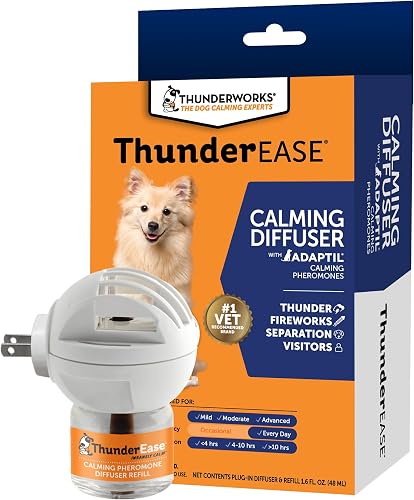
2.Best for time alone: ThunderEase calming pheromone diffuser (powered by Adaptil)
Why it's here: the wrap covers the back seat; this covers the empty house. It keeps working while you're out, with nothing for your dog to wear.
Best forStress when your dog is home alone, and settling into a new home
The catch
You replace the refills, and results vary from dog to dog.
ThunderEase releases a copy of the dog appeasing pheromone
No spray, collar or pill to manage
Each refill lasts 30 days
The catch
You replace the refills, and results vary from dog to dog.
Skip it if
The panic happens in the car or out on a walk. A plug-in only works in the room it is plugged into.
3.Best calming chew, with your vet's OK: Zesty Paws Calming Bites
Why it's here: if the wrap alone doesn't settle the drive, this is the chew to bring up at your next vet visit. Calming chews formulated with Suntheanine (L-theanine), hemp seed powder, chamomile and valerian root.
Best forDogs whose vet OK'd a calming chew, before a car ride or a grooming visit
The catch
It isn't for severe anxiety.
Skip it if
The fear is severe, or your dog takes other medicines and your vet hasn't cleared a chew yet.
A larger dog may need more than one chew per dose. Follow the label, and ask your vet first.
Skip it if
You have a big dog and want one chew per dose, or your dog turns its nose up at duck.
Wrap, diffuser or chew: how the three compare
Three ways to take the edge off, three different jobs. Line them up by how each one works and where it reaches:
The wrap: works by pressure and goes wherever the dog goes, from the back seat to the exam room. Start it before the trigger. Downside: one more warm layer.
The diffuser: works by scent and covers a single room. Start it ahead of the hard week and keep it running. Downside: a refill to remember, and nothing in the car.
The chews: work through what's in them and fit in a pocket. Start them on the label's schedule. Downside: they need a vet's sign-off first, and the bag sets the dose, not you.
The wrap and the diffuser cover different ground, which is why they pair well (more on that below). Doubling up on chews is a vet question, not a guess.
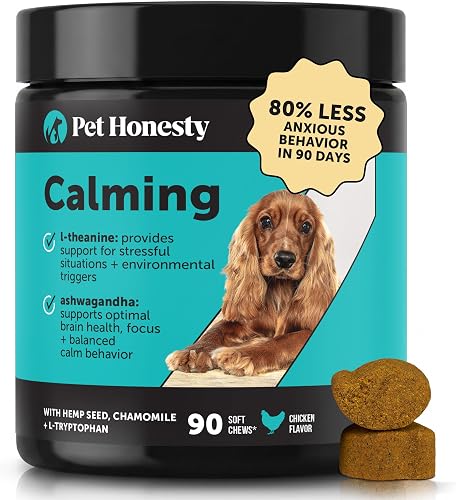
PetHonesty Hemp Calming Chews: hemp seed oil, valerian root and ginger, in a duck flavor.
Follow the label's dose and timing, and ask your vet first, especially if your dog takes other medicines.
Hemp on the front of the bag is not the same as CBD. Both of these list hemp seed (powder in one, oil in the other). Check the ingredient panel for what you are actually buying, and bring the bag to your vet.
Set it up before the bad day
See the 4 pointsHide this section
A calming aid does its best work once it is part of the routine. A little setup on an ordinary afternoon beats a scramble with the sky already rumbling.
Check the wrap's fit. It should hug the chest and belly without pinching or limiting how your dog walks. Harder panting, or wriggling to get out, means loosen it or take it off.
Give the diffuser an open outlet. Pick a wall socket in the room where your dog naps, not one hidden behind the couch, and check the label for placement. Write the start date on the box so the refill swap isn't a guess.
Trial the chew on a normal day. Once your vet has signed off, offer it on a boring weekday first, so you know how your dog takes it before the grooming appointment.
Build a hiding spot. A covered crate or a bed in a back room gives your dog somewhere to go. When it heads there, leave it be.
Holiday guests and strangers at the door
The doorbell rings, and your dog is suddenly under the dining table. None of the picks above is made for fear of people, so this one is about the room, not the cart:
Before anyone arrives, settle your dog in a quiet room away from the front door, with water, its bed and something to chew.
Ask guests to ignore the dog: no reaching, no leaning over, no calling it out. Let it come to them, or not.
If your dog chooses to stay in its room all evening, that's a fine outcome. Pulling it into the party can make the next visit harder.
Together: A wrap and a diffuser work in different ways, so they can run side by side. The diffuser hums along all week; the wrap goes on when the storm rolls in. Ask your vet before you add a chew to anything else.
Training: Pair any product with training: the product eases the moment, and training works on the cause. Time alone is the trigger? See how to train the goodbye in tiny steps.
Still wound up by the second turn? Before you give up on a pick, check the usual misses:
The wrap went on mid-panic. Put it on before the noise starts, and wear it on quiet days too, with treats, so it means calm rather than thunder.
The wrap is loose. It works by pressure, so it should sit snug against the body, not hang like a raincoat.
The diffuser is in the wrong room, or empty. Plug it in where your dog actually spends the day, and swap the refill on schedule (each lasts 30 days).
The chew came too late. Follow the label's timing, and never give more than the directions call for to make up for it.
Everything started on the same day. Add one aid at a time and give it a fair run, so you can tell which one is doing the work and which one is just along for the ride.
Still no change, or the fear is getting worse? That calls for a vet visit, not a third product.
Call the vet when the fear escalates
See your vet if any of these happen:
Your dog injures themselves trying to escape (breaking through crates, jumping through windows)
Anxiety is getting worse despite using calming products
Your dog stops eating or drinking due to stress
Destructive behavior is causing property damage or safety concerns
You notice compulsive behaviors like excessive licking, pacing, or spinning
A veterinary behaviorist can assess whether prescription medication is needed alongside environmental management and training.
Left off the list, and why
See the 3 pointsHide this section
Every trigger: One product rarely covers noise, time alone and fear that keeps growing.
Severe anxiety: Calming supplements are made for mild to moderate anxiety. Severe cases need a vet or a behaviorist.
A spray instead of a plug-in: ThunderEase also sells a calming pheromone spray for dogs. The diffuser stays our home-alone pick; if its one-room limit is your problem, read the spray's label for how it is meant to be used.
Verdict: the ThunderShirt first, the diffuser second
Start here: The ThunderShirt Classic. Pressure instead of supplements, and it rides along wherever the trouble is. The catch: it is one more layer on a hot night.
Add for time alone: the ThunderEase (Adaptil) diffuser, with the refills on a schedule. Chews come last, after your vet signs off. And fear that keeps climbing is a vet visit, not another thing to buy.
It comes down to the match. Pressure wraps, pheromone diffusers and calming supplements work in different ways, so pick by the kind of anxiety, and expect results to vary by dog. Calming supplements are made for mild to moderate anxiety; severe cases need a vet or a behaviorist.
What is the best calming aid for dogs?
The one made for your dog's trigger. For storms, fireworks and car rides, start with the ThunderShirt Classic pressure wrap. For stress when your dog is home alone, a plug-in pheromone diffuser like ThunderEase. Fear that keeps growing needs your vet, not a product.
Can I use calming treats every day?
Only as often as the directions allow. Ask your vet first, especially if your dog takes other medicines.
How quickly do calming products work?
It depends on the type. A wrap goes on in a minute, so put it on before the noise starts. A diffuser works in the background, so plug it in ahead of a stressful week. For a chew, follow the label's timing.
Is CBD safe for dogs?
That is a question for your vet. The two chews on this page list hemp seed oil and hemp seed powder, which are not the same thing as CBD oil. Read the ingredient panel to see which one a product contains. Ask your vet before you give either, especially if your dog takes other medicines.
Can my dog wear the ThunderShirt and use the diffuser at the same time?
Yes, they work in different ways: the diffuser runs in the background, and the wrap goes on for the storm or the drive. Watch for overheating in warm weather, and ask your vet before you add a calming chew on top.
What if my dog won't wear the ThunderShirt?
Go slower. Lay it over your dog's back for a few seconds with a treat, then fasten it for a short stretch on a quiet afternoon, and build up from there. If your dog still fights it, take it off and lean on the diffuser at home and a chat with your vet about travel.
How do I tell what is making my dog anxious?
Watch when the trouble begins. Hiding at the first rumble means noise. Pacing once your keys jingle means being left. Trembling as the car pulls out means travel. No pattern at all, or it keeps getting worse, is a conversation for your vet.